How to write a book

by Giovanni Casali, editorial coordinator

A book is written with method, not with inspiration: one sentence that holds everything up, a structure decided in advance, a daily word count you keep to, a first draft finished without going back, and a serious revision. Inspiration turns up for the people who are already sitting down writing.

The sentence that holds everything up

Before you write chapter one you have to be able to say what the book is about in a single line, with no "and then", no "in a way". It is not a plot summary: it is the reason the book exists. Until that line comes out clean, the book is not ready, only the wish to write it is. That goes for a novel as much as for a manual.

Message us on WhatsApp

Structure comes before words

Even the people who swear they write straight from the gut have a structure, they just discover it halfway and rewrite everything. Set down the turning points: where it starts, what changes things, where it ends up. For a manual that is the table of contents; for a story it is the six or seven scenes you cannot remove. You need a map, not a cage: changing it as you go is normal, not having one costs months.

Five hundred words a day beat one furious Sunday

Do the arithmetic: five hundred words a day, six days out of seven, is a whole book in six months. Whoever waits for a free weekend writes three pages every three weeks and never reaches the end. Better a little, always, at the same hour, with a target you can keep even on bad days. Consistency produces more pages than talent.

The first draft is to be finished, not perfected

The mistake that stops the most books is rewriting the first chapter twenty times. The first draft only exists to get you to the end: if a scene does not work, leave a note in brackets and move on. An ugly finished manuscript can be fixed; three perfect chapters are not a book.

The revision is where the book is really born

Close the file for two weeks, then read the whole thing in one go the way a reader would. Then read it aloud: the voice stumbles exactly where the reader gets bored, every time. Cut the slow openings, the explanations that repeat what has already been understood, the adjectives put in for safety. One good cut at this stage is worth ten new pages.

The mistakes that only show from outside

The first chapter that explains instead of starting. The characters who all speak with the same voice, which is yours. The timeline that slips by a year because nobody kept count. These are mistakes invisible to whoever wrote them and glaring to everyone else: that is why the editor's trade exists, not because you write badly.

When it makes sense to get help

If you have the story but not the time, or the expertise but not the writing, the shortcut is not to give up: it is to have the book written by talking. You tell it in the interviews, we write, you approve chapter by chapter. And if you have already written the whole text yourself, then what you need is not a ghostwriter: it is an editor, and we do that too. Send us the text, we read it and tell you what it really needs, even when the answer is that it needs very little.

Quick questions

How long should a book be?

In the projects we handle: a novel usually runs between 70,000 and 100,000 words, a manual between 30,000 and 50,000, a family memoir even less. The right length is the one the book asks for, not the one that makes it look thick.

How long does it take?

At five hundred words a day, six months for the first draft, plus two or three for the revision. Anyone promising you a book in two weeks is selling you something other than a book.

Do I need an outline even for a novel?

You need to know where you are going to end up, if only to change your mind on purpose. You can discover the road as you write, but with no destination you stop at chapter three.

Can I get help from artificial intelligence?

To organise ideas or unblock a scene, yes. To write the book, no: generic text is recognised immediately, and what no machine can put in is the only thing that makes your book yours, which is your voice.

When the text is finished: How to publish a book
If you would rather just tell it: How much does it cost to have a book written?
Let's talk

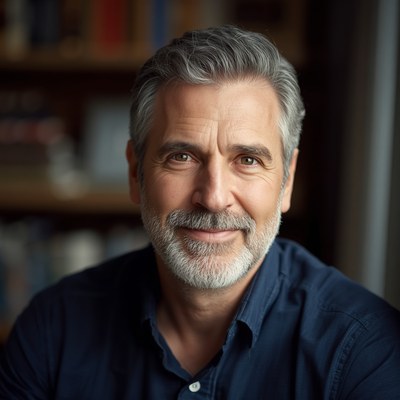
Giovanni Casali

Tell us where you are with your book in a few lines: the consultation is free and without obligation.

info@dualpenbooks.com
Giovanni Casali, editorial coordinator, will reply.

Want to get a sense of how we write first? Read a few excerpts.

CallWhatsApp